
 TR
What Does the Land Rover Parking Brake Fault Warning Mean?
Parking Brake Fault can indicate that the electronic parking brake cannot apply or release as expected. Possible causes include the EPB actuator, cables/mechanism, rear brakes, low voltage or electronic control.
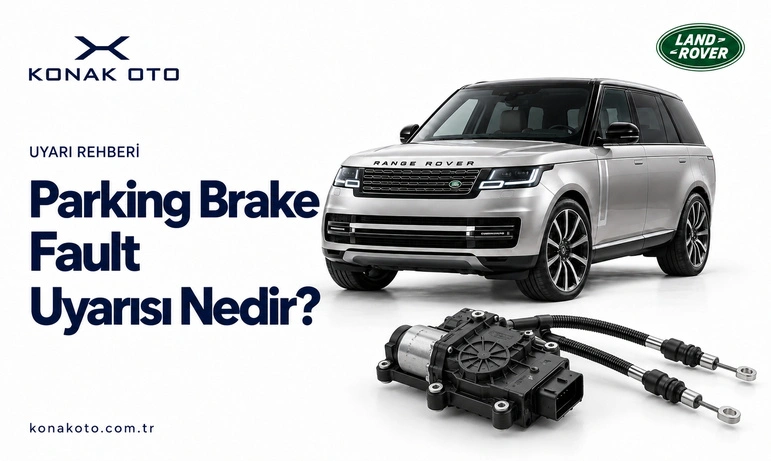
What Does the Land Rover Parking Brake Fault Warning Mean?
In Land Rover and Range Rover vehicles, the Electronic Parking Brake (EPB) applies the parking brake using an electric actuator and control system. A “Parking Brake Fault” warning can indicate that the system cannot apply or release the brake as expected, or that a control fault has been detected.
In Short: What Does This Warning / Fault Mean?
The EPB system is more than the dashboard switch. The actuator/motor, rear brake mechanism, cable or caliper arrangement, brake-control module, electrical supply and sensor information all work together.
What Are the Most Common Symptoms?
· Parking Brake Fault message
· Parking brake will not apply or release
· Abnormal noise from the EPB actuator
· Parking-brake switch does not respond
· Brake/ABS/DSC warnings appear together
· Intermittent fault when the battery is weak
What Are the Possible Causes?
The EPB actuator or motor may be faulty
The internal mechanism can wear or seize. Actuator command and current draw should be evaluated.
What Should Be Checked During Diagnosis?
· Relevant fault codes and live data
· Electrical supply / connections
· Physical mechanism or system performance
· Vehicle/model/VIN-specific technical information
The mechanical brake or cable system may be seized
If the parking-brake mechanism, cable or rear brake components cannot move freely, the actuator can detect excessive load.
Rear brake components or adjustment may be incorrect
On some systems the condition and adjustment of rear brake components affect EPB travel.
What Should Be Checked During Diagnosis?
· Whether the fault is constant or intermittent
· Comparison of commanded and actual values
· Related sensors, wiring and connectors
· System verification after repair
Battery voltage may be low
The EPB actuator can require high current. A weak 12 V battery may cause a fault while applying or releasing the brake.
The parking-brake switch or electrical circuit may be faulty
Switch signal, wiring, connectors, fuses or ground faults can affect commands.
There may be a shared ABS/DSC or brake-control fault
The EPB uses vehicle and brake information from other modules. Shared communication or sensor faults can trigger warnings.
Konak Oto Service Note
Repeatedly applying and releasing the parking brake while Parking Brake Fault is active can place additional load on the actuator if the mechanism is seized. Fault codes and mechanical movement should be checked first.
How Should the Fault Be Diagnosed?
1. Record the complaint and operating conditions
Record when the warning or symptom occurs: cold/hot engine, speed, load, road conditions and whether the fault is intermittent.
2. Read fault codes
Record active, pending and historical DTCs from relevant modules before clearing anything.
3. Review live data
Compare commanded and actual values. Evaluate system behaviour rather than relying on one fault code.
4. Perform physical and electrical checks
Inspect relevant mechanical components, wiring/connectors, power and ground circuits.
5. Perform a controlled road or functional test if required
If the fault only appears under certain conditions, record live data during a controlled test.
6. Verify the repair
Confirm that the fault does not return and that the original complaint has actually been resolved.
What Should You Do When the Warning / Symptom Appears?
1. Make sure the vehicle is safely secured.
2. Do not repeatedly force the parking brake to apply/release.
3. Check battery voltage and other brake warnings.
4. Scan the EPB/ABS modules.
5. Do not replace components before checking the rear brake mechanism and actuator system.
Common Mistakes
Replacing expensive components based on one symptom or fault code.
This approach can lead to unnecessary cost or incorrect diagnosis. The root cause should be verified systematically.
Clearing fault codes before recording them.
This approach can lead to unnecessary cost or incorrect diagnosis. The root cause should be verified systematically.
Ignoring battery voltage and electrical connections.
This approach can lead to unnecessary cost or incorrect diagnosis. The root cause should be verified systematically.
Applying one internet procedure without considering model year and VIN differences.
This approach can lead to unnecessary cost or incorrect diagnosis. The root cause should be verified systematically.
Assuming the problem is permanently fixed because the warning disappears after restart.
This approach can lead to unnecessary cost or incorrect diagnosis. The root cause should be verified systematically.
Which Land Rover Models Can Be Affected?
System design and warning availability vary by model, model year, engine and specification. Relevant configurations may be found across Range Rover, Range Rover Sport, Range Rover Velar, Range Rover Evoque, Defender, Discovery and Discovery Sport families. The exact technical procedure should be confirmed using vehicle/VIN information.
Land Rover Service and Diagnostics in Istanbul
Konak Oto provides Land Rover and Range Rover diagnostic fault detection, mechanical and electrical/electronic inspection, maintenance and repair services in Maslak Ataturk Auto Industry, Istanbul. The objective is not simply to clear a dashboard message, but to identify the actual cause.
Konak Oto | Land Rover & Range Rover Specialist Service
Maslak Ataturk Auto Industry, Istanbul
Frequently Asked Questions
What does Parking Brake Fault mean?
It means the electronic parking brake has detected a fault and apply/release operation may be affected.
Can the battery cause a parking-brake fault?
Yes. Low voltage can affect EPB actuator operation and module communication.
What if the parking brake will not release?
Professional inspection is required without forcing the vehicle because the mechanism may be seized.
Does the EPB motor always need replacement?
No. Mechanical binding, cables, low voltage or electrical faults can create similar symptoms.
Can I drive with the warning?
Driving is not recommended until the parking brake is confirmed fully released and normal brakes are operating correctly.